
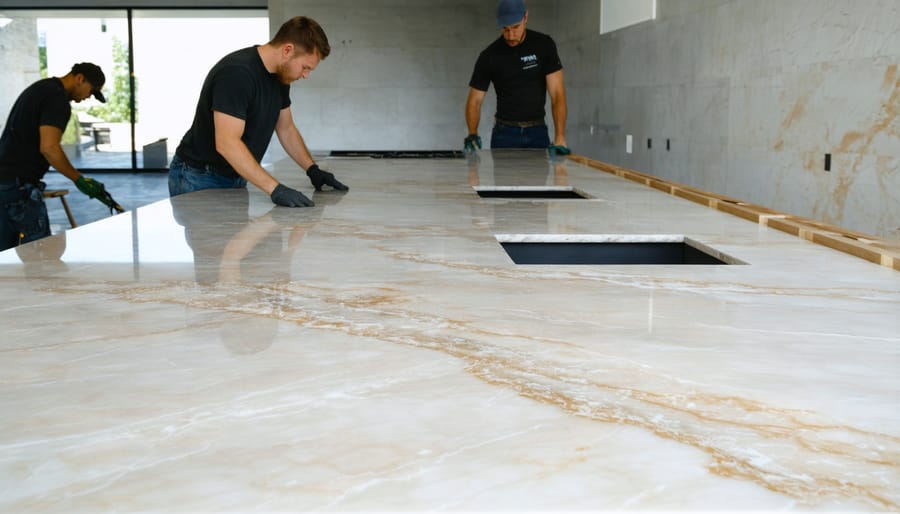
The countertop that graces your kitchen didn’t just appear overnight. Long before installation day, a team of experienced craftspeople worked through dozens of steps to transform a raw stone slab into the centerpiece of your home. At Jackson Stoneworks, creating beautiful, durable countertops in Ocala, FL means managing every detail, from the moment a slab arrives at our shop to the final polish before it heads to your kitchen.
Most homeowners never see this side of the process. But understanding what happens behind the scenes reveals why quality fabrication matters so much.
Receiving and Inspecting Every Slab for Countertops in Ocala, FL
It all begins with the delivery. When a new shipment of stone arrives at our facility, our team carefully unloads each slab and conducts a thorough inspection. We check for cracks, fissures, color consistency, and any imperfections that might compromise the finished countertop. This step protects both our reputation and your investment.
Stone is a natural material, and no two slabs are identical. Granite, quartzite, and marble all traveled from quarries around the world. By the time they reach Ocala, they’ve been cut into transportable slabs, but they still need expert handling to avoid damage. Our team knows how to lift, transport, and store each material properly so it arrives at your home in perfect condition.
Planning the Layout for Your Unique Space
Once your slab passes inspection, our design team gets to work. They review your kitchen’s measurements and create a detailed template that accounts for sink cutouts, cooktop openings, seams (if any), and the exact dimensions of your cabinets. This planning phase ensures that every piece fits precisely when installation day arrives.
For homeowners in Ocala, choosing the right section of a slab matters. If your stone has dramatic veining or color shifts, we position those features where they’ll make the biggest impact. The goal is to highlight the natural beauty of the material while maintaining structural integrity.
Precision Cutting and Fabrication
With the template finalized, fabrication begins. Using specialized diamond blade saws and computer-guided cutting equipment, our team slices through stone with incredible accuracy. Each cut must be perfect. A miscalculation of even a millimeter can throw off the entire installation.
Cutting stone generates clouds of fine dust that catch the light streaming through the shop windows. It’s one of those small, human details that reminds you this is real craftsmanship, not assembly line work. Our fabricators wear protective gear and stay focused, because they know a single slip can ruin weeks of planning.
How Are Countertop Edges Fabricated?
After cutting, each piece moves to the edge profiling station. The edge profile you selected (bullnose, beveled, ogee, or something custom) gets shaped using hand-held routers and polishing pads. This step takes time and skill. A rushed edge job leaves visible tool marks and uneven curves.
Edge fabrication is where the countertop starts to look finished. The stone goes from a rough-cut slab to a piece that feels smooth under your hand. Our team works the stone through progressively finer polishing stages until it reaches the sheen you chose. Some clients prefer a glossy finish that reflects light, while others want the softer look of a honed or leathered surface.
Quality Checks Before Countertops Leave Our Ocala Shop
Before any countertop leaves Jackson Stoneworks, it goes through a final quality inspection. We check dimensions against the template, examine seams for tight alignment, and ensure every edge is smooth and consistent. This step catches issues before they become problems in your home.
The fabrication process also includes pre-sealing the stone (for materials like granite and marble) to protect against stains and moisture. Quartz countertops, which are engineered rather than quarried, arrive from the factory already sealed and ready to perform in busy kitchens.
Coordinating Installation Day in Ocala Homes
All of this behind-the-scenes work leads to one goal: a flawless installation. By the time our installers arrive at your home, every piece has been measured, cut, polished, and inspected. The coordination required to get countertops from our shop to your kitchen involves scheduling, careful transportation, and experienced installers who know how to handle heavy slabs without causing damage.
According to the Marble Institute of America, proper fabrication and installation are essential to the longevity and safety of natural stone surfaces. Rushed work or shortcuts during fabrication lead to cracked countertops, uneven surfaces, and costly repairs down the road.
Why Experienced Teams Matter for Custom Countertops in Ocala, FL
What looks like a straightforward countertop transformation actually involves planning, coordination, specialized equipment, and close attention to detail. The Jackson Stoneworks team has spent years perfecting each step. We know how different stones behave under pressure, which tools produce the cleanest cuts, and how to troubleshoot unexpected challenges (like discovering your cabinets aren’t quite level).
Great surfaces start with great people. When you choose a fabricator, you’re not just buying stone. You’re trusting a team to handle every detail, from the moment a slab enters their shop to the final installation in your home. That’s the kind of care and professionalism Ocala homeowners have come to expect from Jackson Stoneworks.
Ready to Start Your Countertop Project?
Now that you’ve seen what happens behind the scenes, you understand why quality fabrication takes time and why it matters. Every step in the process protects your investment and ensures your countertops will perform beautifully for decades.
If you’re planning a kitchen remodel or building a new home in Ocala, visit Jackson Stoneworks and let our design team help you choose the perfect material. We’ll walk you through our slab inventory, answer your questions about fabrication, and show you exactly what goes into creating the countertop of your dreams. Great surfaces don’t happen by accident. They happen because experienced craftspeople care about every detail, from first cut to final install.





