
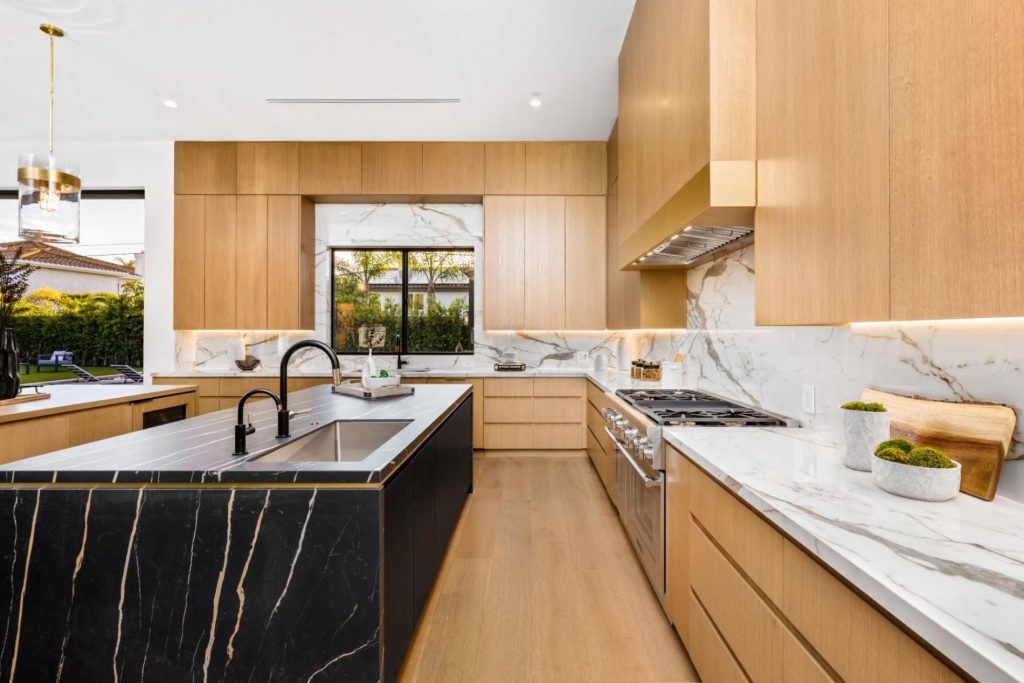
A kitchen countertop install sounds simple. You pick a stone, the fabricator measures, and a few days later your kitchen looks different. What most homeowners don’t find out until something goes wrong is that the stone isn’t the problem. In fact, level cabinets for countertops are what make or break the finished result.
Jackson Stoneworks has seen this play out many times. For example, one missed check before installation can mean a cracked slab, water pooling in corners, or visible gaps at the walls. None of those are cheap to fix after the stone is already in.
What “Level Cabinets for Countertops” Actually Means
“Level” has a specific tolerance here, and it’s tighter than most homeowners expect.
Cabinets need to sit within an eighth of an inch over an 8-foot span. Specifically, that’s the standard Jackson requires before templating can begin, and it matches kitchen cabinet installation guidelines that professional installers follow. An eighth of an inch sounds like nothing. On a rigid stone slab weighing several hundred pounds, it’s everything.
Stone doesn’t flex the way wood or laminate can. Because granite, quartz, and quartzite are rigid materials, any slab sitting on cabinets outside that tolerance is bridging a gap. Over time, that stress concentrates at the weakest points: seams and sink cutouts. As a result, those are exactly where cracks show up.
Why It Matters: What Out-of-Level Cabinets Do to Stone
The consequences aren’t hypothetical. Specifically, here’s what Jackson Stoneworks commonly sees when cabinets fail the level check.
Stone countertops carry real weight, and without even contact across the full cabinet surface, specific spots take all the load while others sit unsupported. Consequently, those contact points become stress concentrations, and stone cracks at stress concentrations. Furthermore, an uneven surface doesn’t drain the way it should. Water pools in low spots, sits against the stone and backsplash line, and works its way into any seam or joint over time.
| Condition | Level Cabinets | Out-of-Level Cabinets |
|---|---|---|
| Stone support | Even contact across full slab | Concentrated stress at high points |
| Crack risk | Low | High, especially at seams and cutouts |
| Water drainage | Drains as designed | Pools in low spots |
| Fit against walls | Flush | Visible gaps at walls and backsplash |
| Long-term outlook | Problem-free for years | Ongoing maintenance issues |
How to Check Before Your Installer Arrives
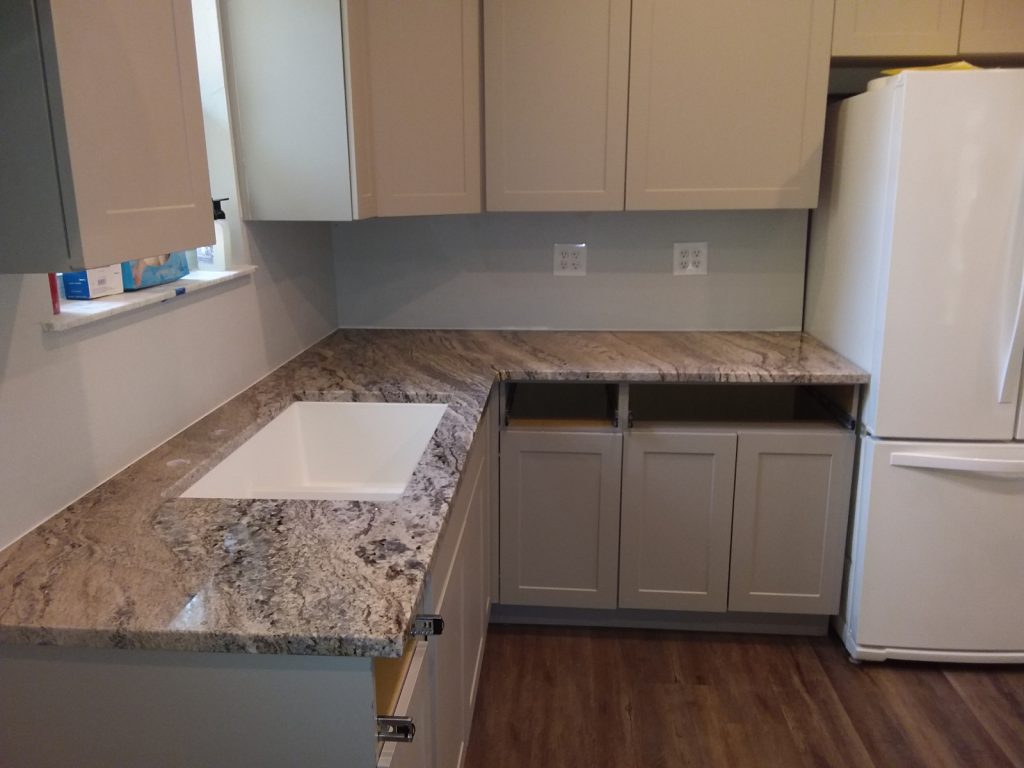
Jackson’s installation process starts with templating, and level cabinets for countertops are the requirement before any measurement can happen. Here’s how to run the check yourself so there are no surprises on measurement day.
New Cabinets
New cabinets should already be level. That’s the cabinet installer’s job, not yours. Ask them to confirm levelness before they leave the site. They check the front edge both front-to-back and side-to-side across each cabinet top, then shim wherever the reading falls outside tolerance. Shims are small, inexpensive, and available at any hardware store. Catching an issue at this stage takes about ten minutes. In contrast, fixing it after stone is already fabricated costs considerably more.
Pre-Existing Cabinets
Older cabinets are the trickier case. Houses settle over time. Floors shift slightly with humidity and temperature changes. As a result, a cabinet that sat level five years ago may not pass the check today. To test yourself, place a spirit level on the front edge of each cabinet section and check both directions. Finally, any section showing more than an eighth of an inch of variation over an 8-foot run needs shimming before the Jackson team arrives for measurements. If you’re unsure, read more about what cabinets need to support stone on the Jackson site.
Common Myths About Level Cabinets for Countertops
Myth: If the floor looks flat, the cabinets are probably fine. In reality, floors almost always have subtle variation across a kitchen footprint. Cabinets installed on a floor with a slight slope can look plumb visually while still failing the level test. A visual check tells you nothing reliable. Use an actual spirit level.
Myth: The fabricator adjusts for uneven cabinets during installation. Stone fabricators cut your countertop to exact measurements taken at template time. They can’t compensate on install day for cabinets that slope or shift, because the slab is already cut. Additionally, shimming a stone slab on site to account for uneven cabinets is not a standard repair. The correction happens at the cabinet stage, not the stone stage.
Myth: This only matters for heavy natural stone, not quartz. Both quartz countertops and natural stone share the same rigidity issue. Engineered quartz is non-flexible, just like granite. The weight varies between materials, but the structural requirement for a level base does not.
Stone Countertop Care After Installation
Once your level cabinets for countertops check is done and the stone is in, long-term care is straightforward. Natural stone benefits from sealing every one to three years depending on use. Specifically, a simple water test tells you when it’s time: if water soaks in rather than beads, reseal. Quartz doesn’t need sealing at all.
Daily cleaning with a pH-neutral cleaner and a soft cloth keeps either surface looking right. However, avoid acidic cleaners on natural stone. Vinegar and citrus-based products etch the surface even through a fresh seal. In fact, that’s one of the few maintenance mistakes that changes how the stone actually looks, not just how clean it is.
Frequently Asked Questions
Why do level cabinets for countertops matter if the stone looks fine right after install?
Problems from uneven cabinets often appear months or years after installation, not immediately. Initially, the stone may look fine on day one. However, as the house settles further and the slab continues to bear weight across unsupported spans, cracks develop at the seams and cutouts. By that point, you’re looking at a fabrication repair rather than a simple cabinet adjustment.
How much does it cost to shim out-of-level cabinets before a countertop install?
In fact, shims themselves cost next to nothing at any hardware store. If your existing cabinets need a professional to re-level them, a general contractor or cabinet installer typically handles the job in a few hours. Moreover, that cost is far less than the cost of a cracked countertop slab. In short, fixing the base before the stone arrives is always the better financial decision.
Can I start the countertop process before my cabinets are ready?
Yes. Use the Quick Quote tool to start the conversation and let the team know your cabinet timeline. For example, Jackson Stoneworks can advise on material selection and project planning well before the templating date, so there’s no reason to wait until everything is in place to begin the process.
Get the Foundation Right Before Your Stone Arrives
Getting level cabinets for countertops right before install day is the single most preventable cause of cracked stone and failed installations. It costs nothing to check and very little to correct with shims. Overall, repairing a cracked slab after the fact is a different story entirely.
Jackson Stoneworks works with kitchens across Gainesville, Ocala, Jacksonville, and The Villages, and every project begins with a cabinet level check before a template is ever taken. If your cabinets are ready, the rest of the process is straightforward.
Schedule a free consultation and start your countertop project right.


